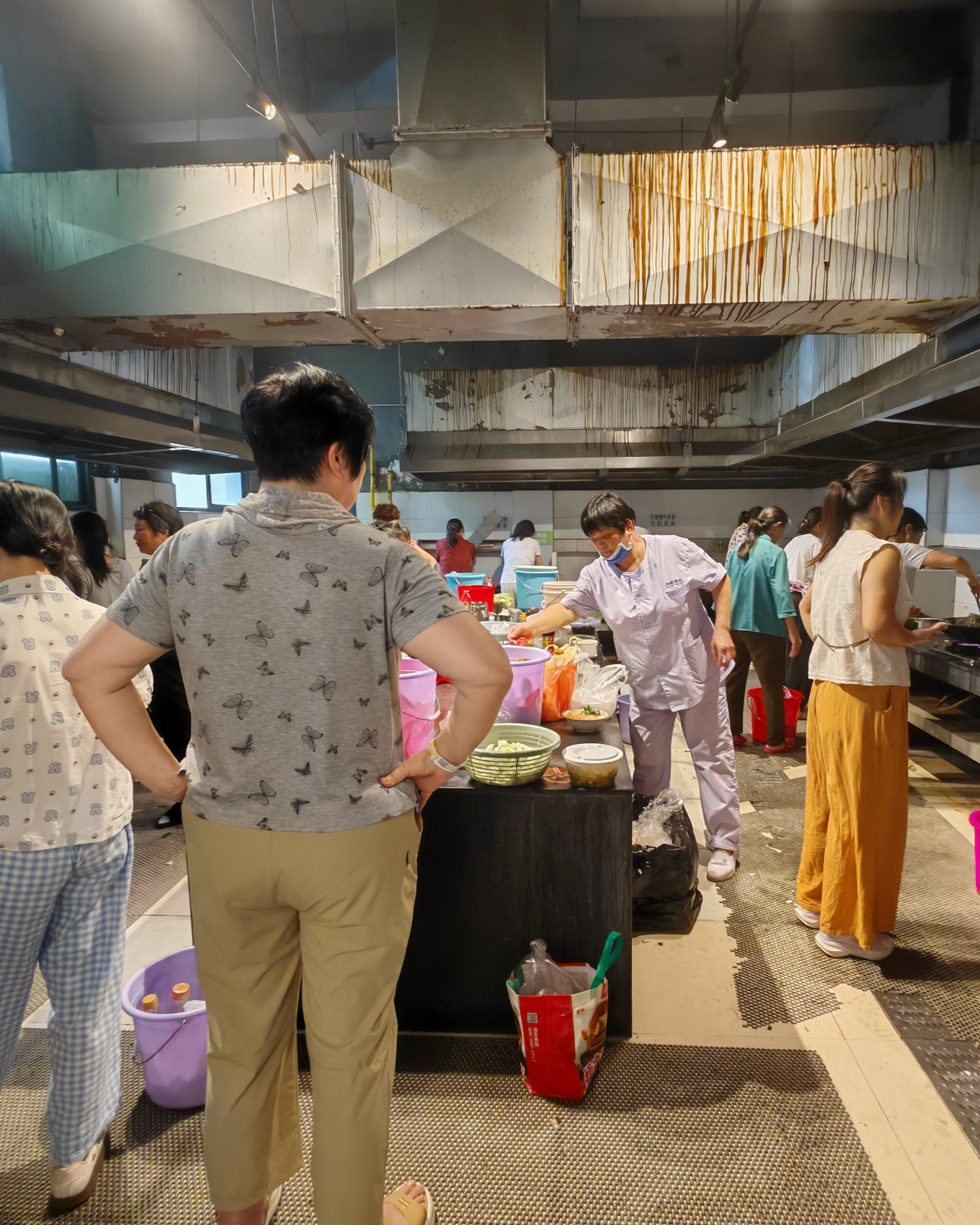
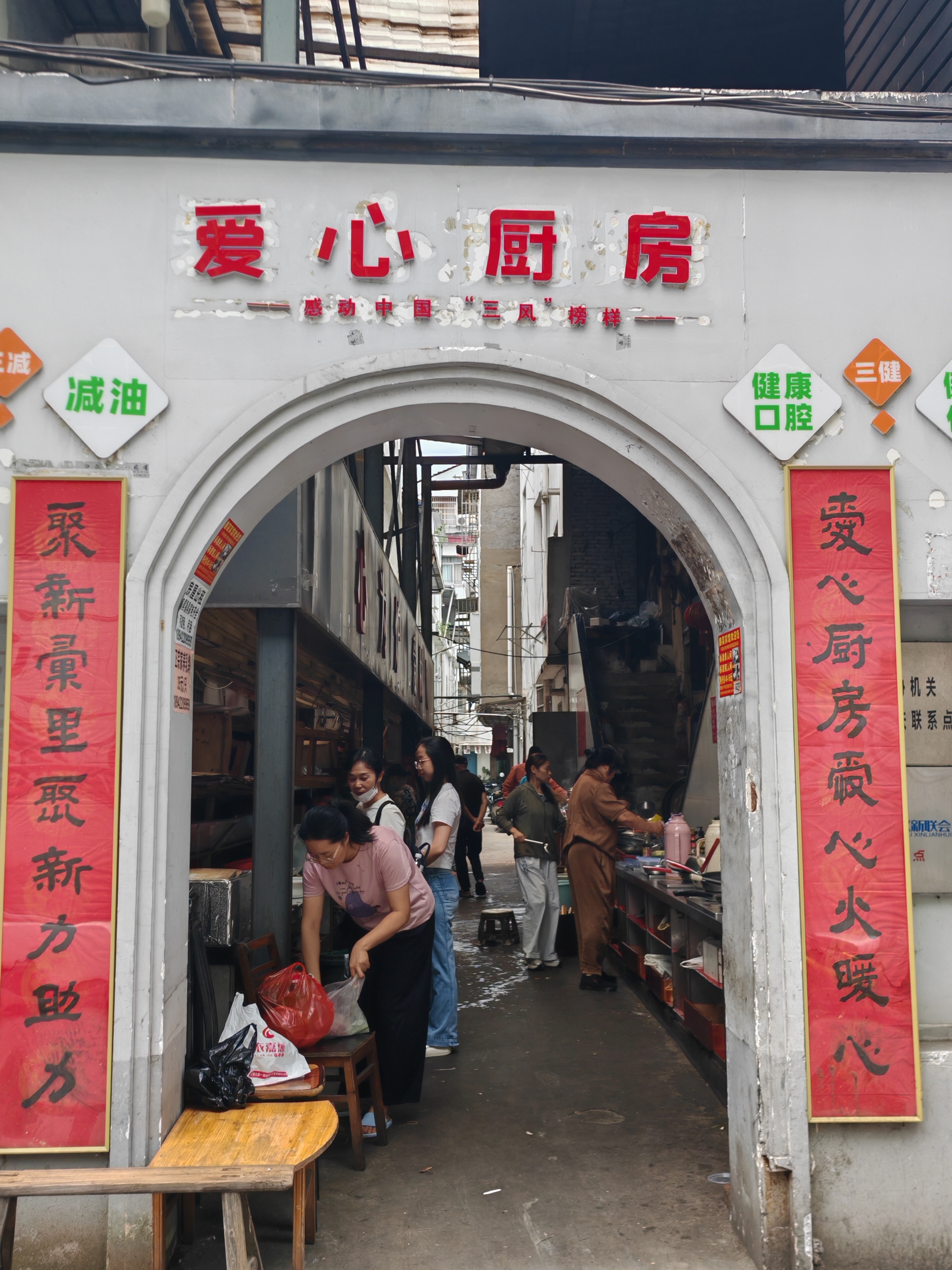
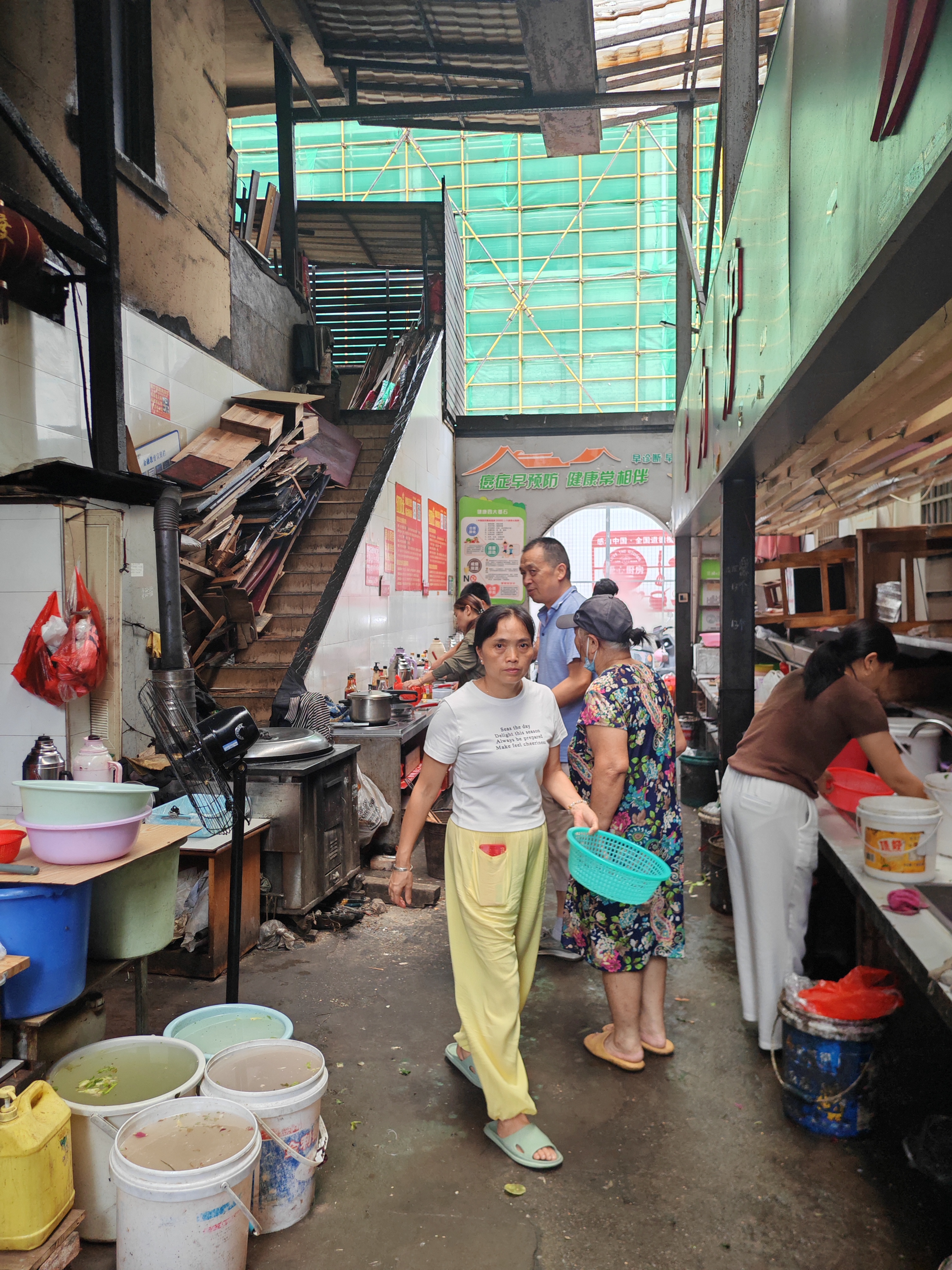
Before 2003, Wan Zuocheng and Xiong Gengxiang ran a breakfast stall selling fried dough sticks. One day, a mother whose child had cancer asked to use their stove to cook for her sick child, and the couple agreed. Word spread, and growing numbers of patient family caregivers began to turn up. The couple closed their fried‑dough‑stick business, bought additional stoves and cookware, and dedicated themselves entirely to running the kitchen for caregivers.
Open 365 days a year from early morning till late at night, the kitchen charges a minimal usage fee and waives fees for financially‑strapped families.
The kitchen has garnered nationwide attention. The local government funded renovations to improve facilities including rain shelters, fire‑safety systems and sewage disposal. Enterprises donated electric stoves, and volunteers lend intermittent support. Nevertheless, day‑to‑day core operations still rest on the shoulders of the septuagenarian couple. Their children can only help out in their spare time, leaving the kitchen facing the challenge of securing a successor…

HOME FLAVOR

-
Under the “shared‑task cooking” model, participating households divide responsibilities by contributing funds, purchasing groceries and preparing meals respectively. This addresses the inability of some families to cook and eases the financial strain on others.
-
Based on the charity kitchen and community kitchen, mutual‑aid cooking groups are established. A “rotational household cooking” model is trialed to reduce cooking frequency and burden for each household.
-
Integrate patient shared kitchens into the humanistic care supporting facilities of hospitals. Establish a multi-party joint support mechanism involving the government, hospitals and public welfare organizations, so as to reduce the reliance on individual acts of kindness alone.
Recommendations


OUR sTORIES
Read the 3 stories of the couple behind the charity kitchen and family caregivers. The charity‑run shared public kitchen provides cooking facilities for a nominal fee, allowing families to prepare home‑style meals for their loved ones. Far more than just a place to cook, it is a space of solace, where hardship, affection and quiet hope unfold amid curling steam and aromas.